
Index
Conversational AI platforms are increasingly expected to support voice. Why? Organizations want to provide a consistent customer experience to their clients, including the telephone. If their service on chat is great, that same level of quality is expected on the phone.
But in practice, many platforms run into serious friction the moment they try to scale from chat to voice. CPaaS solutions may seem like the fastest route, but they often fall short as soon as the complexity increases. Telephony requires much more than just converting speech to text and text to speech.
As a result, teams quickly discover that voice isn’t “just another channel”: it forces you to deal with telecom-specific complexity, latency and audio constraints and different infrastructure patterns. Suddenly you’re building and operating telephony components yourself – SIP connectivity, routing logic, number management, compliance, monitoring – while the required telecom knowledge and operational maturity is typically not part of a conversational AI platform’s DNA.
Fortunately, it is possible to scale to voice without forcing your platform to reinvent its own stack. The strategic question is not whether voice is possible, but how you offer it without diluting focus, delaying your roadmap, or creating long-term operational dependencies.
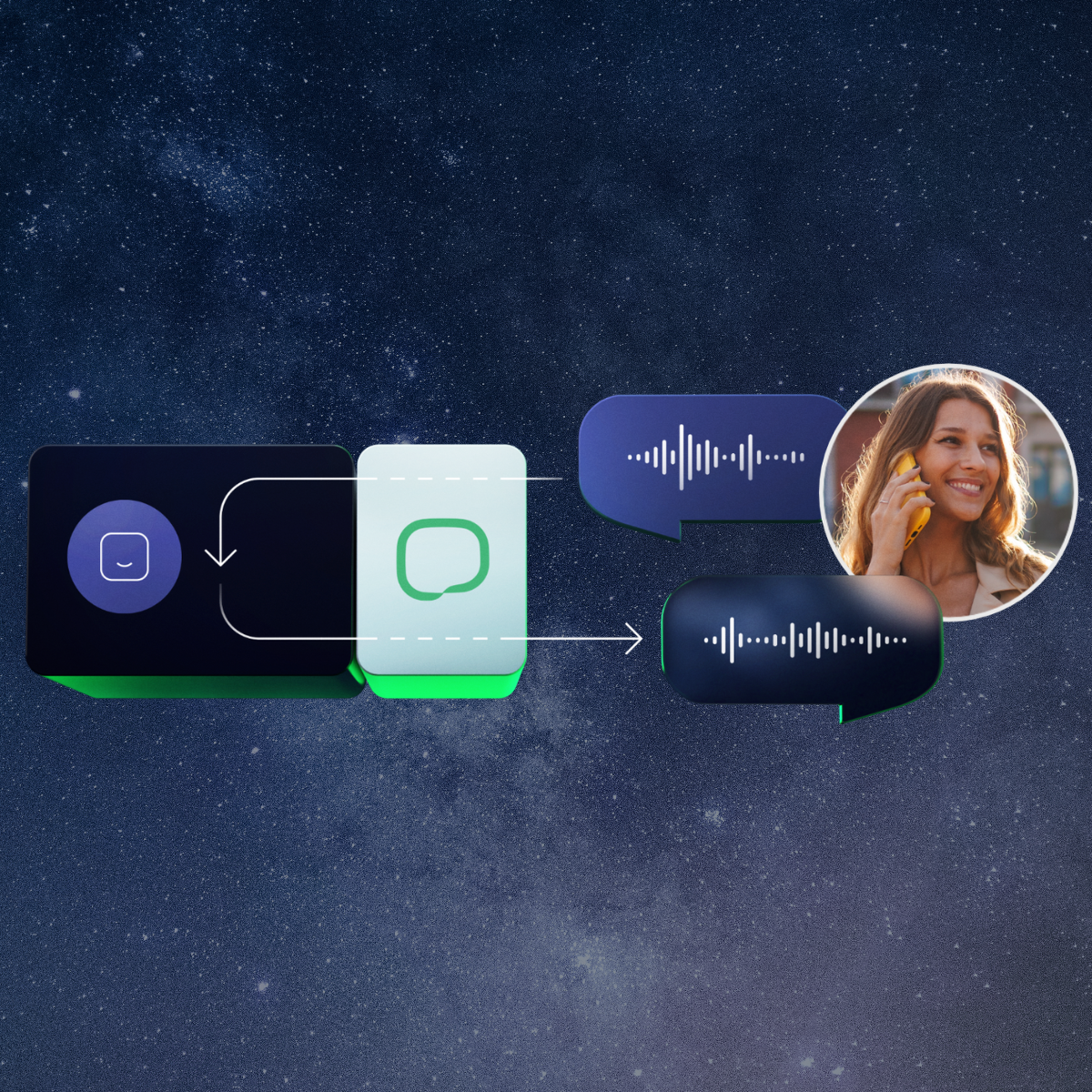
Voice is chat… but you can’t scroll back
Chat and voice may appear comparable at a functional level, but they behave differently in practice:
- Chat is largely asynchronous: users can pause, reread, correct themselves, and provide information in relatively structured ways.
- Voice introduces real-time constraints where speed and flow directly shape the experience. That’s why features like barge-in (letting users interrupt) and filler audio (avoiding silence while processing) quickly become essential to keep conversations natural.
More importantly, voice involves a telephony layer that most platforms don't want to manage and maintain themselves. Scaling to voice isn't just an extra channel: it requires new infrastructure and creates additional operational responsibility.
In a typical build approach, teams must address topics that go well beyond “connecting a phone call to an assistant”, such as:
- call control, routing logic, and escalation scenarios
- interruption handling, conversation repair, and fallback behaviour
- monitoring, troubleshooting, compliance, and governance requirements
Of course, these are things that you can set up well as a platform. But they are rarely the things that distinguish you from other platforms that offer voice. Remember: if you build your own voice solution, you will be expected to deliver and maintain this basic level perfectly for every customer.
CPaaS gives you components, but at scale becomes an engineering commitment
It’s common to approach voice through a CPaaS provider such as Twilio, Vonage, or AudioCodes. These providers offer reliable infrastructure and APIs that allow you to add telephony capabilities to your product. However, CPaaS solutions provide building blocks, not an end-to-end voice product layer for conversational platforms. They tend to shift the work from “buying voice” to “engineering voice”.
With a CPaaS approach, you remain fully in control of how voice is designed, implemented, and integrated into your product. That level of ownership can be attractive for some platforms.
At the same time, it also means that every layer and connection – from telephony integration to text-to-speech and speech-to-text handling and call orchestration – becomes something your teams need to build, operate, and maintain.
At that stage, the operational implications become clearer. You’re not only integrating telephony, but also taking responsibility for keeping the entire voice layer reliable and maintainable over time. This tends to create structural pressure:
- Engineering capacity shifts toward maintaining the voice stack rather than core platform innovation
- Product behaviour fragments across channels, requiring additional effort to preserve consistency
- Operational responsibility increases, including ongoing cost, monitoring, troubleshooting, and maintenance
Let’s be clear: none of this is inherently wrong. But it becomes a strategic trade-off that many conversational AI platforms did not anticipate when they initially decided to “add voice” to their platform.
Extend your platform to voice, without having to master voice yourself.
If your platform’s value lies in orchestration, conversation design, analytics and deployment speed, then your voice strategy should reinforce those strengths rather than slow it down or limit it. The best solution is therefore not a voice solution that needs to be maintained alongside your chat solution, but one that builds on what is already in place.
If you want to extend to voice, look for solutions that enable you to offer a phone channel while preserving the core of what already exists: logic, context, content, and orchestration. This allows your customers to expand from chat to voice within the platform they already rely on, rather than exploring separate voice solutions or competing providers.
So, what’s the practical advantage for you as a platform when looking for a solution like this?
- You can offer voice as part of your portfolio without building and owning a telephony product layer
- Your roadmap remains focused on your differentiators rather than infrastructure complexity
- Your customers gain a scalable phone channel that behaves consistently with their existing assistant
Your roadmap called. It wants its time back.
Your customers increasingly want to offer a truly omnichannel assistant experience, and a reliable voice channel is a critical part of that expectation. But building it internally is rarely the most efficient or strategically aligned approach. CPaaS alternatives can enable a good start, but they often translate into long-term engineering and operational ownership that doesn’t contribute to product differentiation.
For platforms that want to expand their offer without absorbing disproportionate complexity, the most sustainable path is not to build voice from scratch, but to extend proven capabilities through an architecture designed specifically for this purpose.
If you’re exploring voice for your platform, Seamly can help you get there faster. We provide a voice layer built for conversational AI platforms, so you can launch enterprise-grade telephony without turning voice into your next core competency.